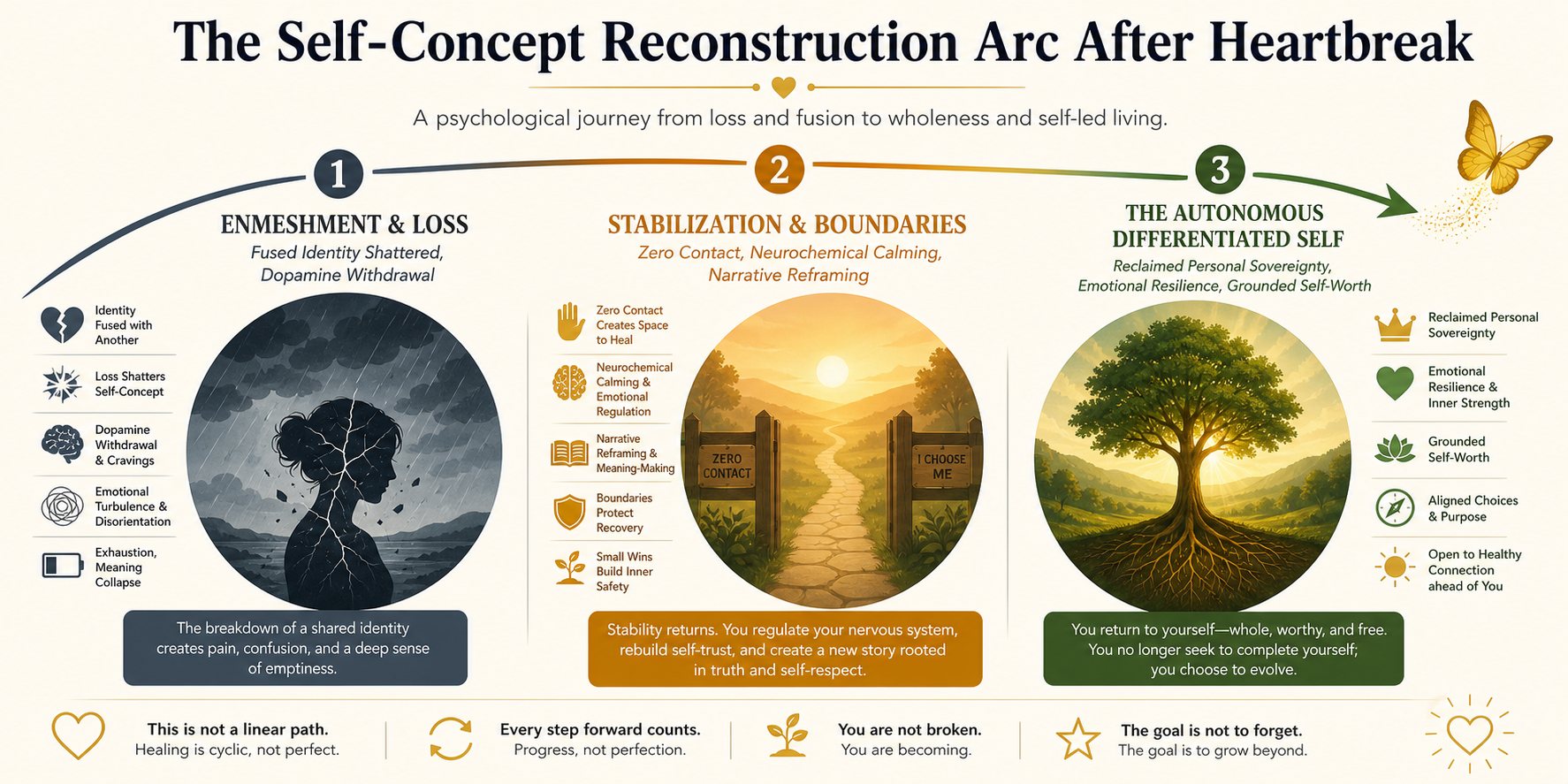
Heartbreak is not merely an emotional event; it is a profound neurobiological withdrawal. Brain-imaging studies demonstrate that the sudden severance of an intimate relationship activates the exact same neural pathways as physical pain and opioid withdrawal. The urge to text an ex, ruminate over past memories, and monitor their social media is an involuntary chemical craving for dopamine.
Healing from a significant relationship rupture is not about rushing to 'move on' or adopting performative stoicism. It is a systematic process of self-concept restoration: stabilizing the nervous system, processing ambiguous loss, establishing radical boundary hygiene, and reclaiming the identity pillars that were sublimated into the partnership.
Neurochemical Reset
Minimum duration of strict zero-contact required to extinguish acute dopamine craving loops.
Ambiguous Contact Allowed
Complete elimination of social media monitoring, mutual friend probing, and casual texting.
Identity Reconstruction
Deliberate investment across somatic health, professional goals, friendships, and solitary joy.
1. The Neurobiological Withdrawal vs. Identity Rebuilding
| Recovery Phase | Neurobiological & Psychological State | Maladaptive Instinct (Prolongs Pain) | Self-Restorative Action (Heals) |
|---|---|---|---|
| Acute Withdrawal (Weeks 1–4) | Intense dopamine depletion, physical insomnia, acute panic loops. | Checking ex's social media, re-reading old messages, seeking 'closure' talks. | Strict No-Contact protocol; treating cravings as chemical withdrawal symptoms. |
| Narrative Rumination (Weeks 5–8) | Obsessive analyzing of what went wrong; idealizing the past relationship. | Blaming self entirely or villainizing the ex in cyclical anger loops. | Unsent closure letters; journaling objective catalog of relationship incompatibilities. |
| Identity Reconstruction (Weeks 9–16) | Gaps in daily routine; disorientation of solo identity. | Rebounding into unexamined dating to escape the discomfort of loneliness. | Reclaiming personal hobbies, solo travel, and investing in deep non-romantic friendships. |
| Integrated Acceptance (Month 4+) | Neutral emotional response to memories; renewed future optimism. | Comparing new acquaintances against idealized past memories. | Approaching life from an autonomous, self-sufficient baseline. |
“Closure is not something an ex gives you in a final conversation. Closure is the decision you make when you accept that the ending was the message.”
2. The Strict Rules of Digital and Physical Boundary Hygiene
- Enforce Comprehensive Digital No-Contact: Block, mute, or archive all communication channels and shared cloud albums to prevent visual triggering.
- Construct a 'Reality Catalog': Maintain a written list on your phone detailing the objective incompatibilities, compromises, and painful realities of the relationship to counter nostalgia bias.
- Reclaim Physical Geographies: Visit places associated with the past relationship in the company of close friends to re-anchor those locations with new, empowering memories.
Heartbreak Recovery Protocol
- Treat the urge to reach out to an ex as a transient 15-minute chemical impulse; delay action until the wave passes.
- Avoid all dating apps for at least 90 days to prevent using external validation as an emotional anesthetic.
- Prioritize high-protein nutrition, daily resistance training, and consistent sleep to biologically stabilize cortisol levels.