In the Indian sociocultural context, marriage is rarely a union between two individuals; it is an alliance between two extended family ecosystems. While this collective structure offers unmatched emotional and social support, it also creates intense structural pressure when traditional familial obligations collide with modern marital boundaries.
Establishing boundaries within an Indian family system is often misconstrued as disrespect, Western individualism, or filial betrayal. However, Bowen Family Systems theory reveals that psychological boundary-setting is not about severing familial bonds; it is about achieving healthy differentiation—honoring intergenerational elders while establishing the marital dyad as the primary decision-making unit.
Primary Loyalty Hierarchy
Aligning spouse-to-spouse alignment before negotiating external family expectations.
Native Child Buffer
The biological child must manage difficult boundaries with their own parents directly.
Differentiation Index
Ability to establish personal values without reacting in explosive defiance or submissive compliance.
1. The Cultural Conflict Matrix: Collectivism vs. Marital Autonomy
Navigating joint family dynamics requires recognizing the conflicting cultural narratives operating within modern households:
| Familial Arena | Traditional Collectivist Expectation | Modern Marital Requirement | Healthy Differentiated Middle Path |
|---|---|---|---|
| Financial Decisions | Joint pooling of income; major purchases vetted by family elders. | Autonomous household budgeting and independent wealth building. | Transparent financial contributions to parents alongside non-negotiable private marital savings. |
| Living Arrangements & Privacy | Open-door joint family presence with collective daily routines. | Sacred private physical and emotional space for the couple. | Clear structural boundaries for private evenings and designated couples-only travel. |
| Child Rearing & Parenting | Collective grandparent-led discipline and traditional caretaking. | Primary parental authority over education, diet, and values. | Honoring affectionate grandparent roles while enforcing core parental discipline baselines. |
| Conflict Resolution | Involving in-laws and elders as mediators during marital disputes. | Resolving marital disagreements strictly behind closed doors. | Strict prohibition of discussing private marital friction with extended family members. |
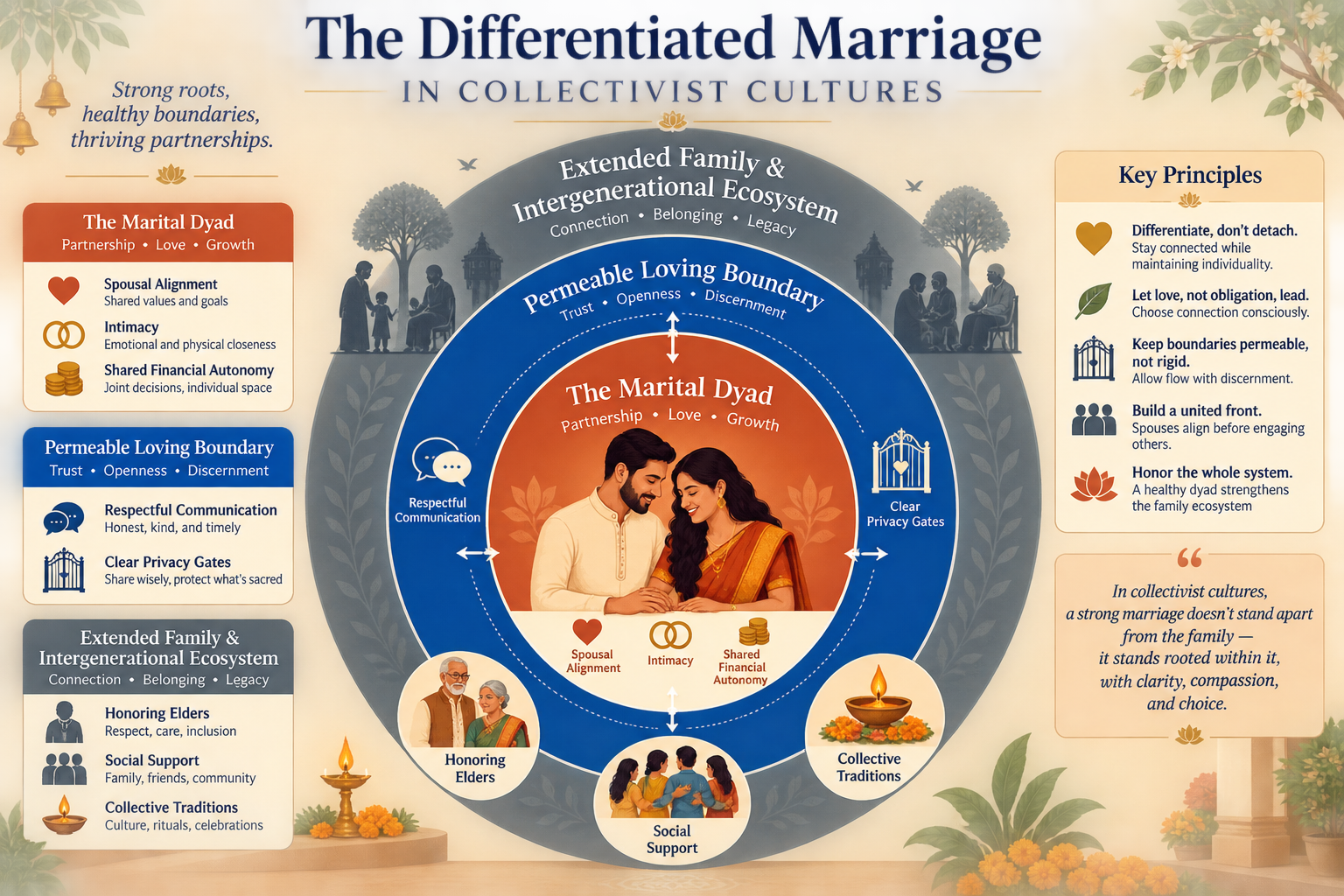
“A boundary is not a declaration of war against family traditions; it is the perimeter within which a marriage develops the strength to love the extended family without resentment.”
2. The Golden Rule of In-Law Mediation
The single most protective practice in an Indian marriage is the 'Native Child Buffer' rule. Whenever boundaries must be established regarding living schedules, visiting frequency, or financial expectations, the biological child must communicate the boundary directly to their own parents.
- Never Outsource Conflict to the In-Law: If an issue arises regarding parental visits, the son/daughter must state the boundary as a unified couple decision ('We have decided...'), never blaming the spouse ('She doesn't want...').
- Separate Dutiful Respect from Total Compliance: You can speak to elders with profound cultural warmth and respect while calmly declining requests that compromise marital stability.
- Establish Weekly Marital Syncs: Maintain a protected weekly conversation to calibrate family pressures before social or festive commitments.
Intergenerational Boundary Checklist
- Present all major decisions regarding travel, relocation, and career moves as settled spousal agreements before announcing to extended family.
- Eliminate triangulated venting: Never discuss active marital grievances with mothers or siblings.
- Define explicit visiting boundaries during festive periods to preserve nuclear rest windows.