Managing remote engineering teams by tracking mouse movements, demanding constant Slack green-dot presence, and cramming calendars with 30-minute sync meetings is not leadership—it is low-trust surveillance. It destroys cognitive focus, repels top engineering talent, and incentivizes performative busyness over actual technical output.
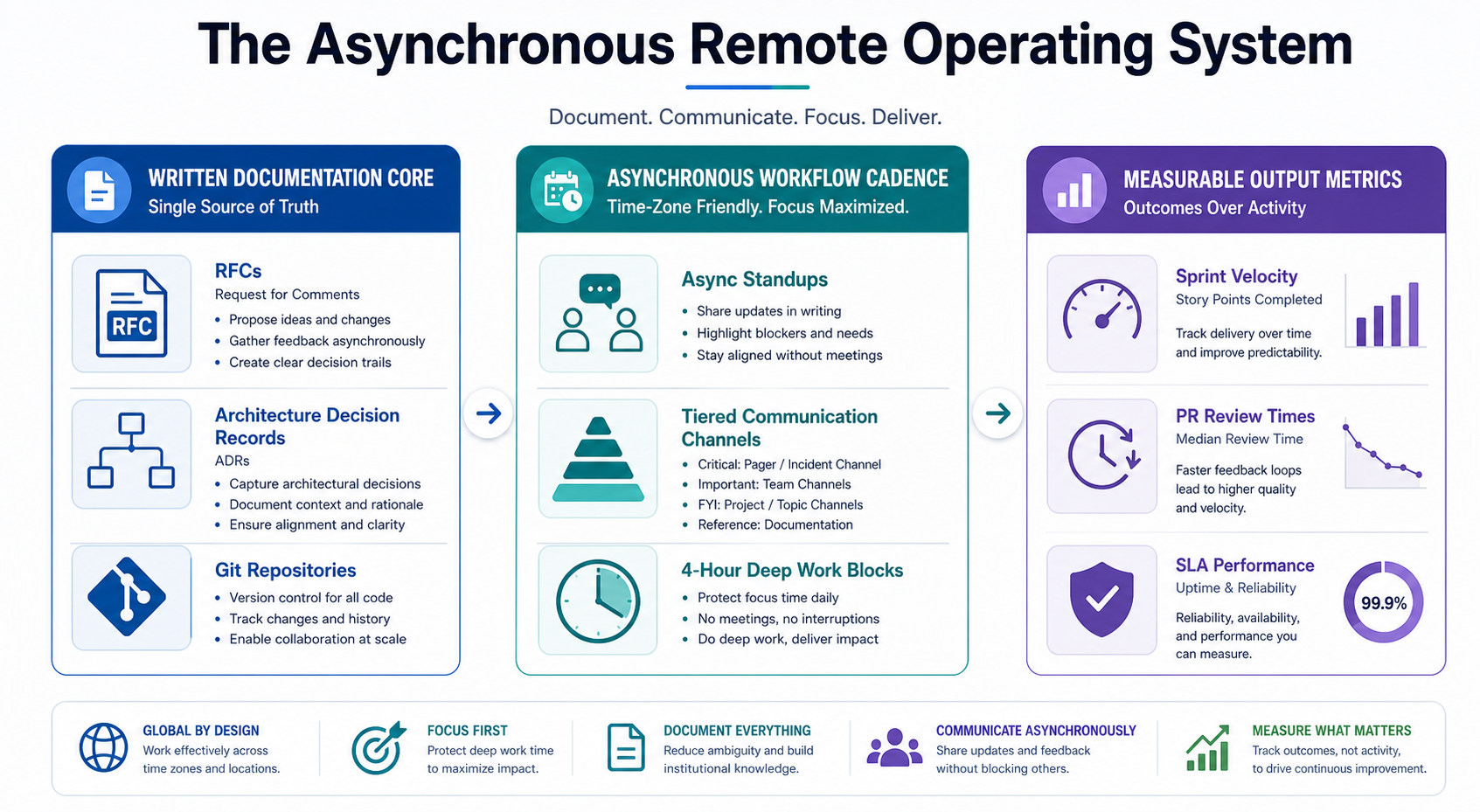
Leading remote technical teams with clarity requires shifting from presence-based management to asynchronous, outcome-based governance. By codifying architectural decisions in writing, establishing predictable operational cadences, and measuring output through completed merge requests and restored SLAs, distributed teams achieve unprecedented velocity.
Daily Deep Work Blocks
Protected calendar time reserved exclusively for uninterrupted engineering focus.
Max Meeting Overhead
Maximum proportion of an engineer's weekly working hours allocated to scheduled calls.
Written Decision Records
All architectural and policy changes documented via formal RFC/ADR files.
1. Surveillance-Driven vs. Clarity-Driven Remote Management
| Operating Dimension | Presence & Surveillance (Fails) | Asynchronous Clarity (Thrives) | Impact on Delivery |
|---|---|---|---|
| Work Measurement | Track hours logged, keystrokes, and active Slack status. | Measure completed pull requests, sprint velocity, and SLA restoration. | Eliminates performative online presence; rewards true technical delivery. |
| Decision Making | Ad-hoc Zoom calls with unrecorded verbal agreements. | Written Request for Comments (RFC) and Architectural Decision Records (ADRs). | Provides searchable institutional memory and includes all time zones. |
| Communication Cadence | Expectation of instant replies within 5 minutes. | Default asynchronous communication with explicit SLA tiers for urgency. | Protects uninterrupted deep work blocks and reduces cognitive context switching. |
| Status Updates | Daily hour-long verbal status meetings. | Asynchronous written standup updates in Slack/Teams with blocker tags. | Saves 15+ engineering hours per week across the team. |
“If you cannot evaluate an engineer's performance without seeing their active status indicator or watching their screen, you do not have a remote management problem—you have a deliverable definition problem.”
2. The 3-Tier Communication Protocol
Remote teams must establish unambiguous service level expectations for internal communication to prevent interrupt-driven chaos:
- Tier 1: Emergency Escalations (P1 Outage / Security Breach): Direct PagerDuty page or phone call. Expected response: < 15 minutes.
- Tier 2: Operational Questions & Reviews (Sprint Tasks / Code Reviews): Slack/Teams channels or pull request comments. Expected response: < 4 business hours.
- Tier 3: Strategic Input & Architectural Proposals: Written RFC documents, GitHub discussions, or internal wikis. Expected response: 24–48 hours.
Remote Team Leadership Checklist
- Ban all employee surveillance and activity-tracking software across your technology infrastructure.
- Require all technical decisions affecting multiple pods to be documented in a written Architecture Decision Record (ADR).
- Protect company-wide 'No Meeting' focus blocks (e.g., Tuesday/Thursday mornings) for uninterrupted engineering.