It is the most predictable, destructive dance in adult relationships: one partner feels disconnected and pushes harder with criticism, urgency, or demands, while the other feels overwhelmed and retreats behind emotional silence or physical exit. The more the pursuer presses, the further the withdrawer retreats—confirming both partners' worst fears.
The pursue-withdraw cycle is not caused by one partner being 'too needy' or the other being 'emotionally unavailable'. In the framework of Emotionally Focused Therapy (EFT), this dynamic is an unmanaged protest against perceived disconnection. Reframing the cycle as a shared external enemy allows couples to dismantle the pattern without assigning pathology.
Prevalent Relationship Pattern
Proportion of distressed couples exhibiting persistent pursue-withdraw interaction loops.
Diffuse Physiological Arousal
Heart rate threshold where cognitive listening collapses into defensive stonewalling.
Minimum Physiological Reset
Mandatory timeout duration required for the nervous system to return to social engagement baseline.
1. Deconstructing the Dynamic: Surface Reaction vs. Attachment Vulnerability
Every pursue-withdraw cycle operates on two simultaneous psychological tiers: the visible secondary reaction and the hidden primary attachment fear:
| Partner Role | Visible Secondary Behavior | Hidden Primary Vulnerability | Core Unmet Attachment Need |
|---|---|---|---|
| The Pursuer | Increased volume, urgent texting, criticism, demands for immediate dialogue. | "I feel abandoned, invisible, and terrified that our connection is dying." | Reassurance, emotional responsiveness, and verified presence. |
| The Withdrawer | Stonewalling, monosyllabic replies, shutting down, leaving the room. | "I feel inadequate, judged, and terrified of making things worse." | Emotional safety, relief from perceived failure, and pacing. |
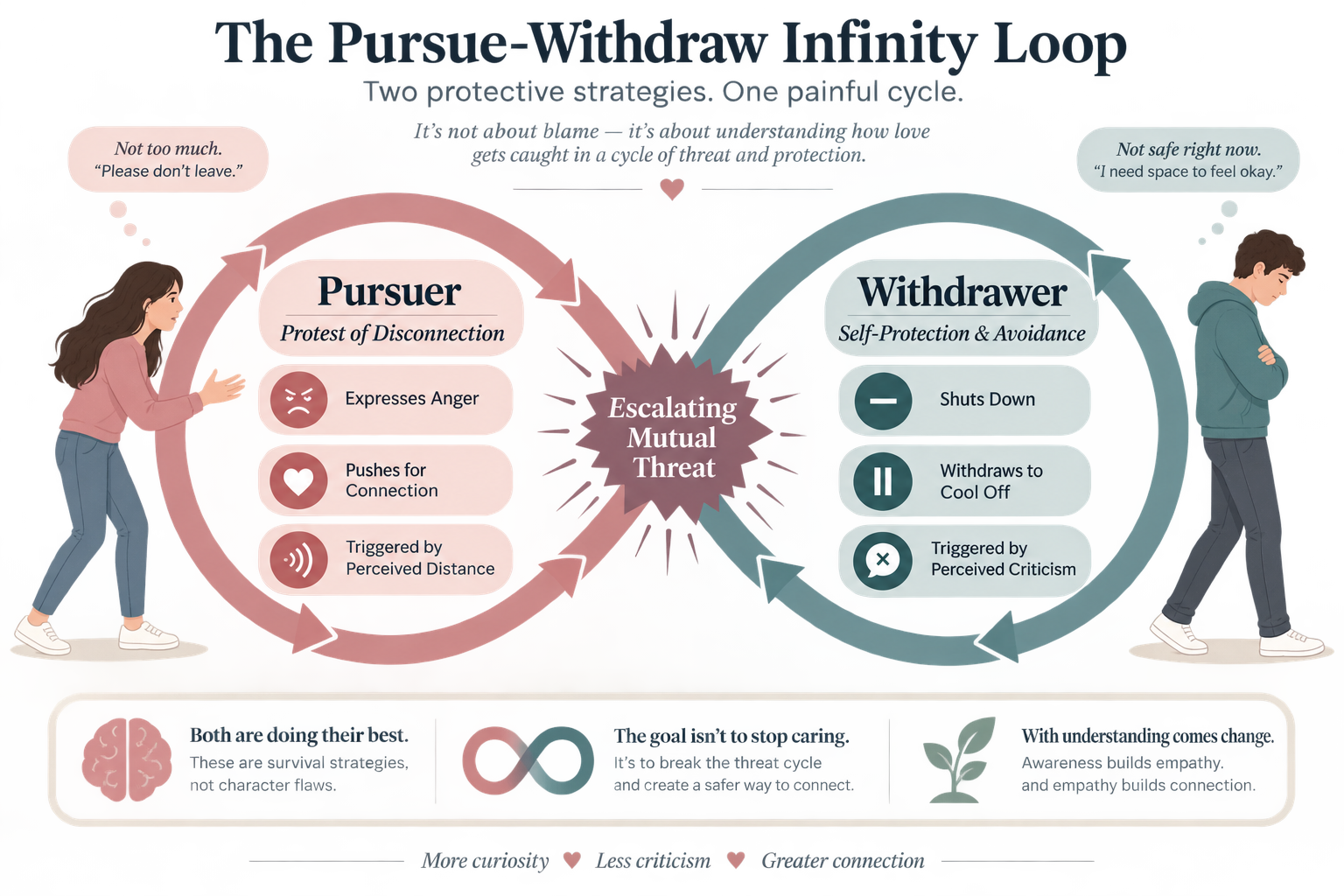
“Behind the harshest criticism of a pursuer is a desperate cry for connection; behind the coldest silence of a withdrawer is a desperate attempt to protect the relationship from further damage.”
2. The De-escalation Protocol: How to Interrupt the Loop
Breaking the cycle requires both partners to recognize their personal nervous system activation and take joint responsibility for pausing the script:
- Name the Cycle as the Enemy: Externalize the pattern by saying: 'The loop is taking over right now. We are both getting flooded.'
- The Structured 20-Minute Pause: Withdrawers must explicitly state a return time ('I am overwhelmed and shutting down; I need 20 minutes to calm down, and then I will come back to discuss this').
- Shift from Critique to Primary Emotion: Pursuers must express the underlying vulnerability ('I am feeling scared and lonely right now') instead of weaponizing secondary anger ('You never listen to me').
De-escalation Action Checklist
- Halt all contentious discussions immediately if either partner's heart rate exceeds 100 beats per minute.
- Never chase a partner who has communicated a structured, time-bound timeout.
- Resume the conversation within 24 hours to prevent the withdrawal from turning into chronic disconnection.