Many technology executives harbor a secret fear: that creating a 'blameless' culture means abandoning accountability, tolerating incompetence, and letting engineers off the hook when systems fail. This fear stems from a fundamental misunderstanding of operational psychology.
Blamelessness and accountability are not opposites—they are mutually dependent. In a punitive culture, engineers hide errors, deflecting responsibility to avoid punishment. In an accountability-driven 'Just Culture', engineers openly disclose mistakes immediately because accountability is focused on fixing the systemic vulnerabilities that allowed the human error to impact production.
Post-Mortem Velocity
Time window to publish a completed blameless post-mortem after a P1 incident.
Action Item Tracking
Post-mortem remediation tasks assigned to accountable owners with hard deadlines.
Repeat Incident Rate
Drop in identical failure modes achieved by addressing root systemic conditions.
1. The Just Culture Behavioral Classification Matrix
To maintain rigorous accountability without creating a toxic blame environment, leadership must classify operational incidents according to James Reason's Just Culture framework:
| Behavior Category | Operational Definition | Real-World Example | Accountable Management Response |
|---|---|---|---|
| Human Error | Inadvertent slip, lapse, or mistake while following procedures. | Typo in firewall script executed during an approved change window. | Blameless: Update automation to validate syntax and add dry-run verification. |
| At-Risk Behavior | Bypassing safety controls because the barrier felt unnecessary. | Disabling MFA temporarily on a test account to expedite debugging. | Coaching: Address why the friction exists; redesign the secure workflow to be faster. |
| Reckless Behavior | Conscious disregard of substantial, unjustifiable risk. | Deploying unreviewed, unversioned schema updates directly to production database. | Disciplinary Action: Formal performance intervention; enforce mandatory peer review gates. |
| Malicious Violation | Deliberate intent to cause harm or exfiltrate company data. | Intentional data deletion or unauthorized export of customer records. | Termination: Immediate revocation of credentials and legal referral. |
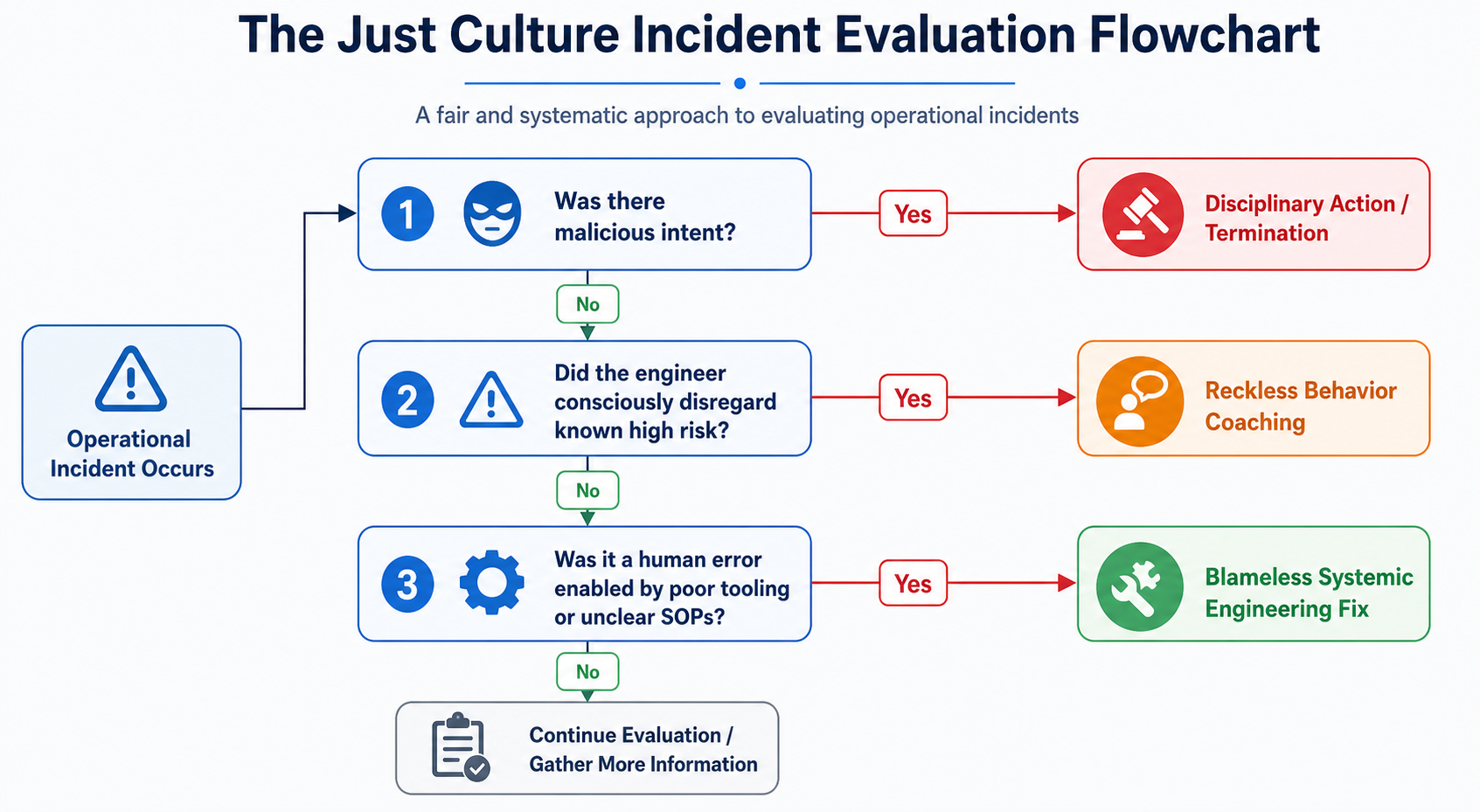
“You cannot fire your way to reliability. If you punish an engineer for making an honest typo, you have not fixed your infrastructure—you have merely guaranteed that the next engineer will conceal their mistake until it is unrecoverable.”
2. The Structure of a Blameless Post-Mortem
A blameless post-mortem maintains rigorous operational accountability by centering the investigation on system telemetry and environmental context:
- Detailed Chronological Timeline: Documenting exact timestamps of alerts, human actions, and state changes based strictly on log data.
- Systemic Contributing Factors: Analyzing why the engineer's action made sense to them at the time given the telemetry available on their screens.
- Concrete Remediation Commitments: Assigning specific engineering owners and deadlines to automated tests, alerting rule updates, and guardrail scripts.
Blameless Post-Mortem Governance Checklist
- Never include personal names in post-mortem executive summaries; use functional roles (e.g., 'On-Call Engineer').
- Track post-mortem action items in Jira/Azure DevOps with the same priority as customer-facing features.
- Review past post-mortem action items monthly to verify that promised systemic guardrails were deployed to production.